The First-Ever Real-Time AI Influence Leaderboard

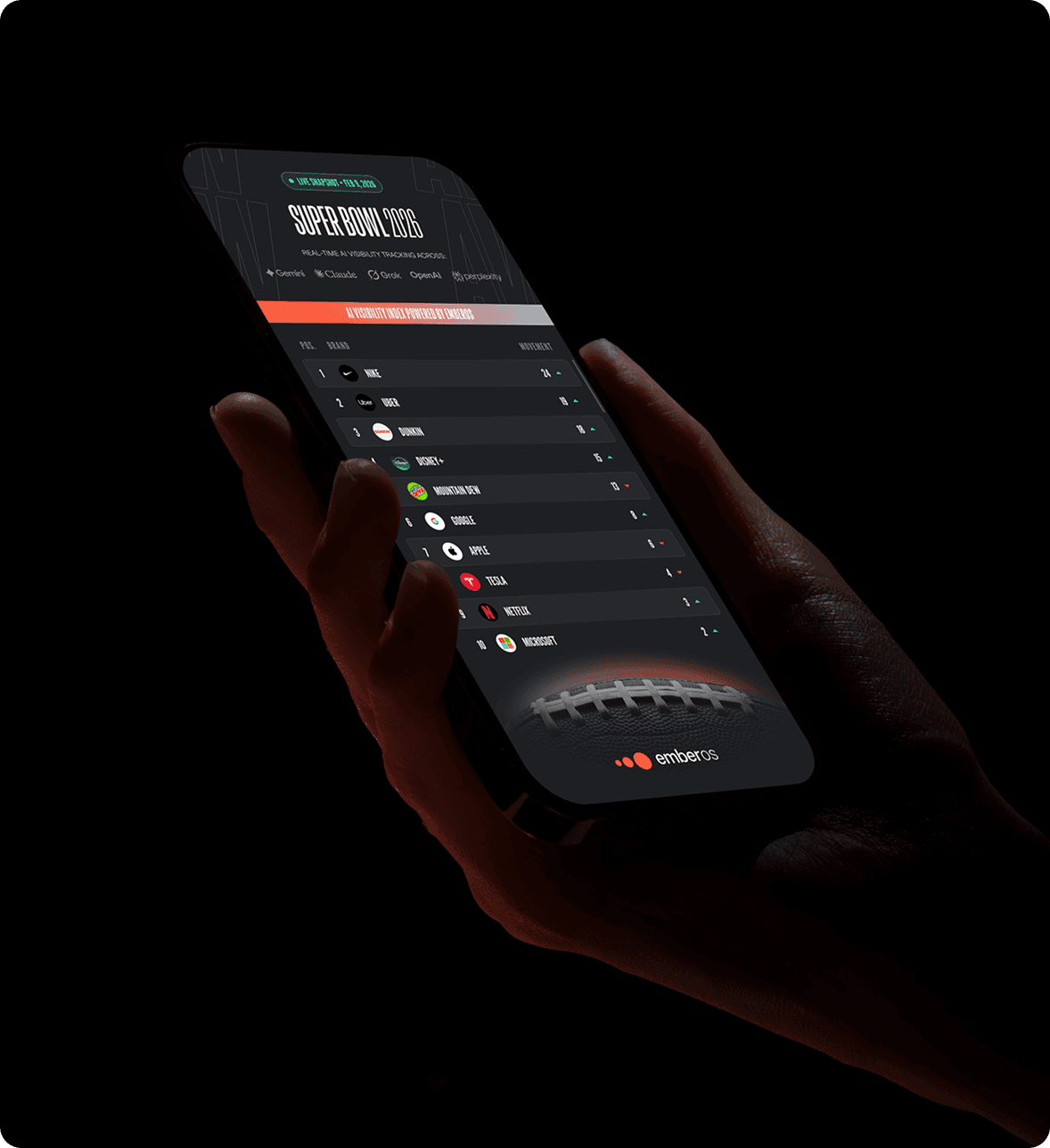
During the Super Bowl, millions of people discuss commercials across social platforms, media, and, increasingly, AI systems. This case study asks a new question for the first time: Which Super Bowl ads are most visible inside AI-generated answers and how does that change in real time?
What Happened Live
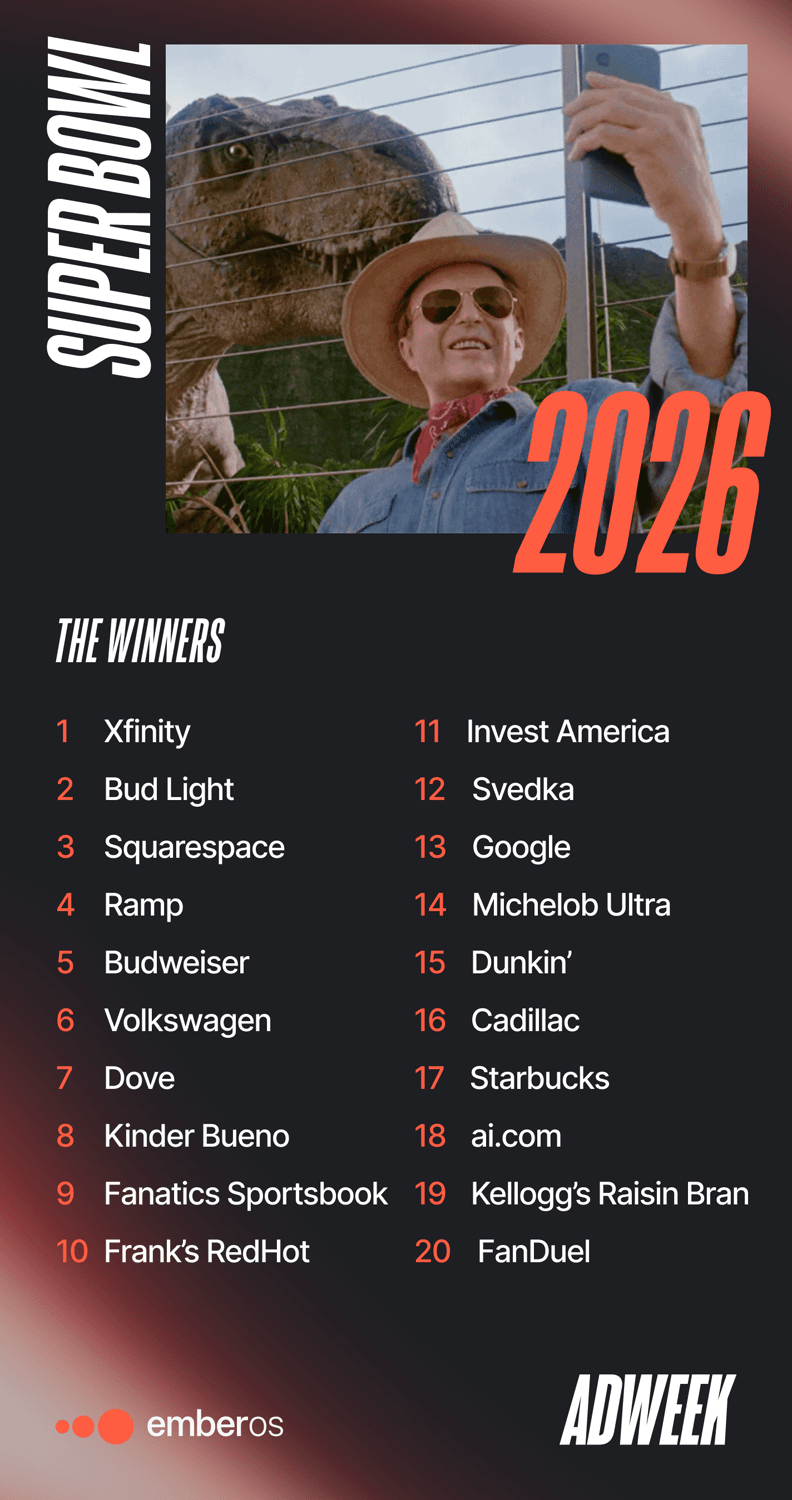
Consumer brands dominated. Xfinity, Bud Light, Squarespace, Ramp, Budweiser, Volkswagen, and Dove led AI recall across platforms. Not a single leading AI company cracked the top 20, despite heavy Super Bowl ad spend from Anthropic and OpenAI.
What Happened in the LLMs
Clear Takeaway: Humor travels well across models because it's rooted in cultural references that are easy to recall. Emotional storytelling holds steady because it gives models a clear narrative to repeat. Purpose-driven ads are the most volatile because each model interprets tone and intent differently.
- 40% to 55% of identical prompts produced meaningfully different framing across LLMs. Same question, very different answers.
- Rankings varied by 20% to 30% depending on whether a model prioritized informational clarity, emotional resonance, or cultural relevance. Ramp, for example, ranked No. 3 in Claude, No. 5 in ChatGPT, and dropped to No. 11 in Gemini.
- Each model showed distinct tendencies. ChatGPT favored narrative synthesis. Claude leaned toward emotional resonance and purpose. Perplexity rewarded strong press coverage and was citation-driven. Gemini prioritized cultural aggregation. Grok amplified cultural reaction and sentiment.
- Challenger brands like Ramp and Invest America punched above their weight because their messaging was easy for LLMs to summarize, cite, and resurface in follow-up prompts.
Silent Winners: The Brands AI Mentions More Than Humans
Not every brand that wins in AI wins on social and that gap is where things get interesting. We compared the Top 20 brands in the AI Influence Index (AI rank) against where it would typically land by pure social volume during the game and 12-hour post-game window (social rank). When AI rank significantly outpaces social rank, you've got a "silent winner." A brand that overperforms in AI visibility without relying on meme velocity or celebrity-driven spikes.
This year's silent winners tell a consistent story. Xfinity landed #1 in AI despite sitting around #12–18 on social media. Squarespace (#3 AI vs. #10–16 social) and Ramp (#4 AI vs. #15–25 social) punched well above their social weight. Further down the list, Invest America, ai.com, Frank's RedHot, and Kellogg's Raisin Bran all showed the same pattern. Brands that LLMs surface reliably even when the internet isn't buzzing about them. The through-line: these brands are easy to summarize, tied to clear use cases, and sit in categories that attract high prompt frequency.
Why These Brands Rank Higher in AI Than on Social
- Clear brand-to-use-case mapping (e.g., "build a website," "what was the investing ad?")
- Explainable value propositions that LLMs can retrieve and summarize
- Strong category cues that match common prompt patterns (telecom, finance, food, B2B tools)
- Simple product narratives that surface in inventory-style prompts ("which brands advertised?")
What This Reveals
AI Visibility is a Separate Scoreboard
The brands that rank highest in AI aren't always the ones trending on social. AI visibility is its own competitive layer, and most brands aren't tracking it yet.
Structure Beats Volume
Social rewards spikes. AI rewards clarity. The brands that showed up in AI weren't the loudest. They were the easiest to summarize, categorize, and recall.
Every Model Tells a Different Story
The same prompt produces meaningfully different answers across ChatGPT, Claude, Gemini, Perplexity, and Grok. Where your brand ranks depends on which model your customer is asking.
The Super Bowl AI Visibility Index reveals which ads actually live on inside AI, and what it takes to be one of them.
Start Monitoring Your AI Presence